By Arnold Ageta
Heads of State, Ministers of Health, multilateral institutions, philanthropic leaders, and global health experts convened at the Global Health Campus in Geneva for the Accra Reset High-Level Dialogue on Global Health Architecture, held on the margins of the 79th World Health Assembly (WHA79), where Member States of the World Health Organization have convened to discuss the next era of global health.
The event, titled Geneva Clarion Call: Rethinking Power, Financing and Global Health Delivery, brought together more than 250 high-level participants to advance discussions on sovereign, country-led approaches to global health reform and delivery.
The Accra Reset, a head-of-state-led initiative launched by H.E. President John Dramani Mahama during the 2025 United Nations General Assembly, seeks to advance a new architecture for development and global health grounded in sovereignty, coordinated execution, domestic capacity, and regional collaboration.
Since launch, it has expanded to become an international reform movement.
The event featured keynote interventions and panel discussions with senior leaders including H.E. John Dramani Mahama, President of the Republic of Ghana; H.E. Budi Gunadi Sadikin, Minister of Health of Indonesia; H.E Dr. Alexandre Padilha, Minister of Health, Brazil; H.E Aden Duale, Minister of Health of Kenya; H.E Kwabena Mintah Akandoh, Minister of Health of Ghana; Dr. Kelechi Ohiri, Director General/CEO at the National Health Insurance Authority of Nigeria; Professor Mohamed Yakub Janabi, Regional Director of World Health Organization African Region; Mr. Peter Sands, Executive Director of The Global Fund; Dr. Sania Nishtar, Chief Executive Officer of Gavi, the Vaccine Alliance; Dr. Vanessa Kerry, Chief Executive Officer of Seed Global Health; Dr. Priya Basu, Executive Head of The Pandemic Fund; Mr. Elhadj As Sy, Chair of the Board of the Kofi Annan Foundation; and Dr. Magda Robalo, President and Co-Founder of The Institute for Global Health and Development.
The High-Level Dialogue explored the future of global health governance, financing transitions, and the practical realities of delivering health sovereignty at national level.
Discussions emphasized the need for multilateral institutions and financing mechanisms to evolve in ways that reinforce national priorities rather than fragment them.
In his Presidential Address, H. E. President John D. Mahama outlined the next phase of the Accra Reset agenda, which focuses on the work of the High-Level Panel on Global Health Architecture and Governance (HLP-GHAG), established under the Accra Reset process to generate practical recommendations for reforming global health systems and financing structures.
Further, the President in his speech launched the two pillars of the Accra Reset Sovereign Health Agenda complementary to the already announced High Level Panel on Reform of the Global Health Architecture and Governance: the Reform Observatory (RIO), and the HINGE mechanism to drive investments into transformative local-led health deliverables.
“If the Accra Reset can move health commitments into working programmes, it can do so for any sector,” said President Mahama. “Health is the vanguard, the proof of concept, and the moral imperative.”
During the Ministerial Dialogue, participating leaders reflected on lessons from national reform experiences and the growing importance of domestic financing, regional manufacturing, institutional resilience, and sovereign decision-making in health systems.
“The money is there,” said Budi Gunadi Sadikin, Minister of Health of Indonesia. “As an Accra Reset Co-Chair, my proposal is to help all countries develop proper health care financing pathways, so health ministers can convince their finance ministers and the big banks to invest in health.”
In his speech, Dr. Alexandre Padilha, Minister of Health of Brazil said that countries of the Global South must play a central role in shaping global decisions.
“Sovereignty is not merely an aspiration or a rhetorical concept, but an executable agenda grounded in stronger national health systems, sustainable financing, and local and regional production capacities,” said Dr. Padilha.
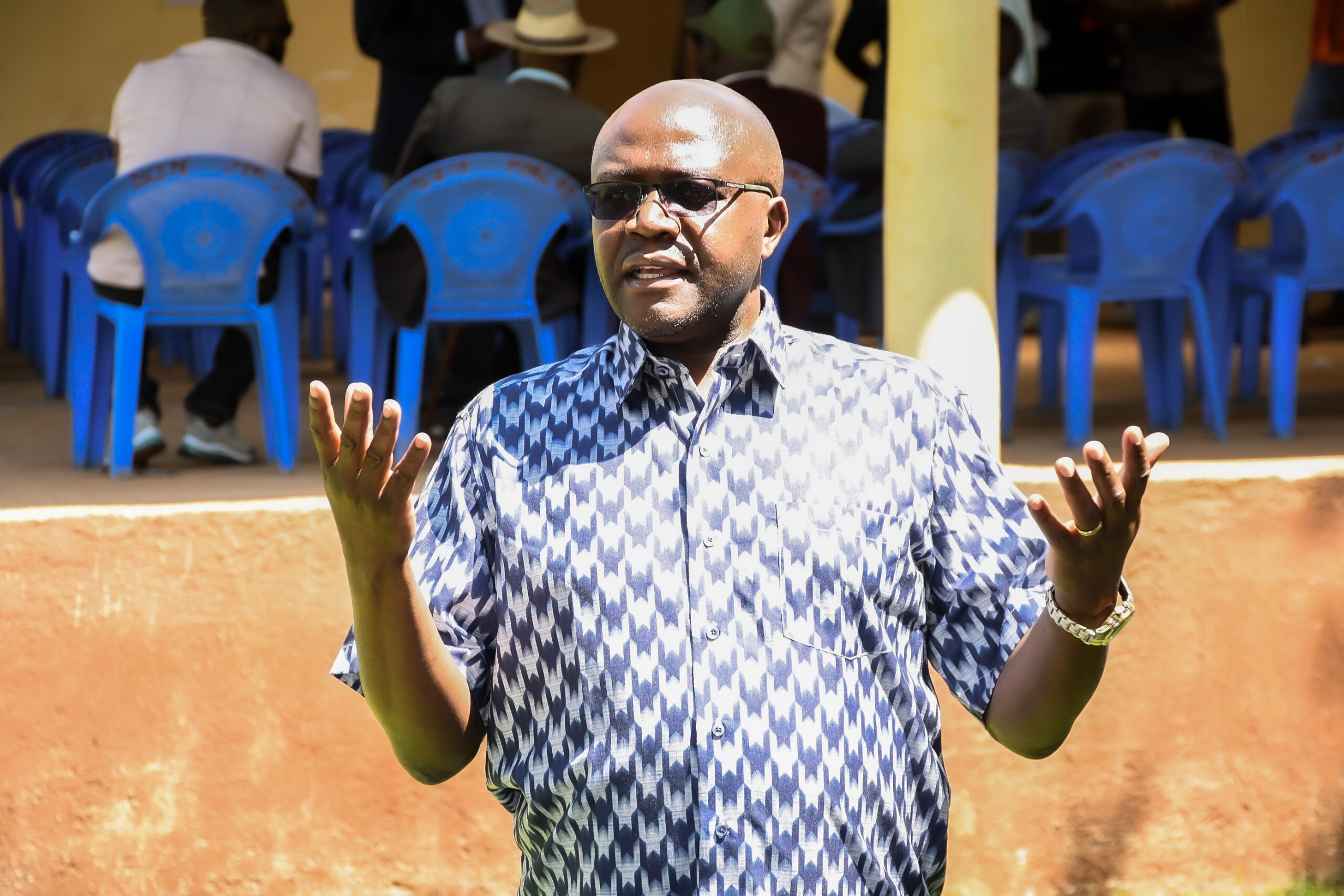
Kenya’s Cabinet Secretary of Health Aden Duale said that Kenya and Ghana are leading in terms of creating practical health sovereignty.
“How do we do that? By making sure that we take charge of the health systems and health financing in our country,” said Duale.
He added that in eighteen months, Kenya has mobilized domestically to fund our health care and universal health coverage.
Mr. Elhadj As Sy, Chair of the Board of the Kofi Annan Foundation and member of the High-Level Panel affirmed his commitmenet to the Reset saying the Accra Reset is a leadership response to that call, creating a movement based on sovereignty.
“Citizens of Ghana, Africa and the Global South are calling for equity, fairer trade, better health, sustainable financing and accountability,” said Elhadj.
The event also featured special remarks from Dr. Vanessa Kerry, CEO of Seed Global Health, who drew on new analysis mapping more than 11 major global health reform efforts.
She highlighted a striking level of consensus around country-led reform and better alignment on financing, while warning that overlapping initiatives could deepen fragmentation without a clear roadmap for implementation.
Dr. Kerry called for stronger coordination behind national priorities and sustained investment in the health workforce, institutions, and systems needed to turn reform into real improvements in care.
“There is now remarkable agreement on the need for and direction of reform. Across initiatives, we found growing alignment around the principles of country ownership, stronger national systems, sustainable financing, and the need to move beyond fragmented, project-based approaches. While the sector is increasingly aligned on what needs to change, there is not yet enough agreement on how reforms are to be carried out. The next phase of reform must be a coherent implementation roadmap,” said Dr Vanessa Kerry.
Leaders from major global health financing institutions reflected on how their organisations are adapting to support long-term country ownership, sustainability, and transition pathways.
Dr. Kelechi Ohiri, Director General and CEO of the National Health Insurance Authority of Nigeria said that in Nigeria, the Health Sector Blueprint became the foundation and the platform for coordinating activities across the entire country.
“With the Global Fund, we began to pilot the integration of [HIV, TB, and malaria] vertical programs, not just in the health system broadly, but also in health insurance,” said Dr. Kelechi.
“This collaboration reflects how we are evolving our partnerships – supporting national and regional leadership while strengthening the systems, workforce and supply chains needed to save lives and sustain progress,” said Peter Sands, Executive Director of the Global Fund to Fight AIDS, Tuberculosis and Malaria.
“Through our Gavi Leap reform programme, we are demonstrating that it is possible to achieve radical change at scale and at pace, advancing country sovereignty and freeing up resources for frontline delivery in parallel,” said Dr Sania Nishtar, CEO of Gavi, the Vaccine Alliance.
“The future of global health security will be defined by countries’ capacity to build, finance, and sustain resilient health systems that can rapidly detect, prevent, and respond to emerging threats. The Pandemic Fund was established to accelerate this shift—moving from aid dependence toward self-sustainment and health sovereignty by catalyzing domestic investment and crowding in international financing around country-led priorities. The Accra Reset embodies this transformation, and we are proud to support its vision.” Dr. Priya Basu, Executive Head, the Pandemic Fund Professor Mohamed Yakub Janabi situated the Accra Reset within a wider shift in global health governance, urging that reforms be judged by their impact on people’s lives and by whether financing and decision-making genuinely support, rather than sideline, country leadership.
“This moment is not just for challenge, but of choice. We must move from promises to progress, from commitment to impact. This means aligning financing with national priorities and advancing governance and financing together to build a system that works with countries, not around them,” said Professor Janabi, Regional Director of the World Health Organization African Region.
In his closing remarks, Dr Naveen Rao reflected on the significance of the Accra Reset as a country-led effort to reshape global health cooperation around sovereignty, long-term partnership and delivery.
“What inspires me about the Accra Reset is its clarity of purpose: countries are defining the destination, and the rest of us are driving projects to help pave the way. This is not about another cycle of pilots and promises, but about advancing work aligned with sovereign choices, investing in resilient systems, and staying the course long enough for people to feel the difference in their clinics, communities, and lives.” Dr Naveen Rao, Senior Vice President of the Health Initiative at The Rockefeller Foundation.
The convening concluded with a networking reception bringing together Ministers, Heads of State delegations, multilateral organisations, philanthropic institutions, investors, civil society leaders, and accredited media.